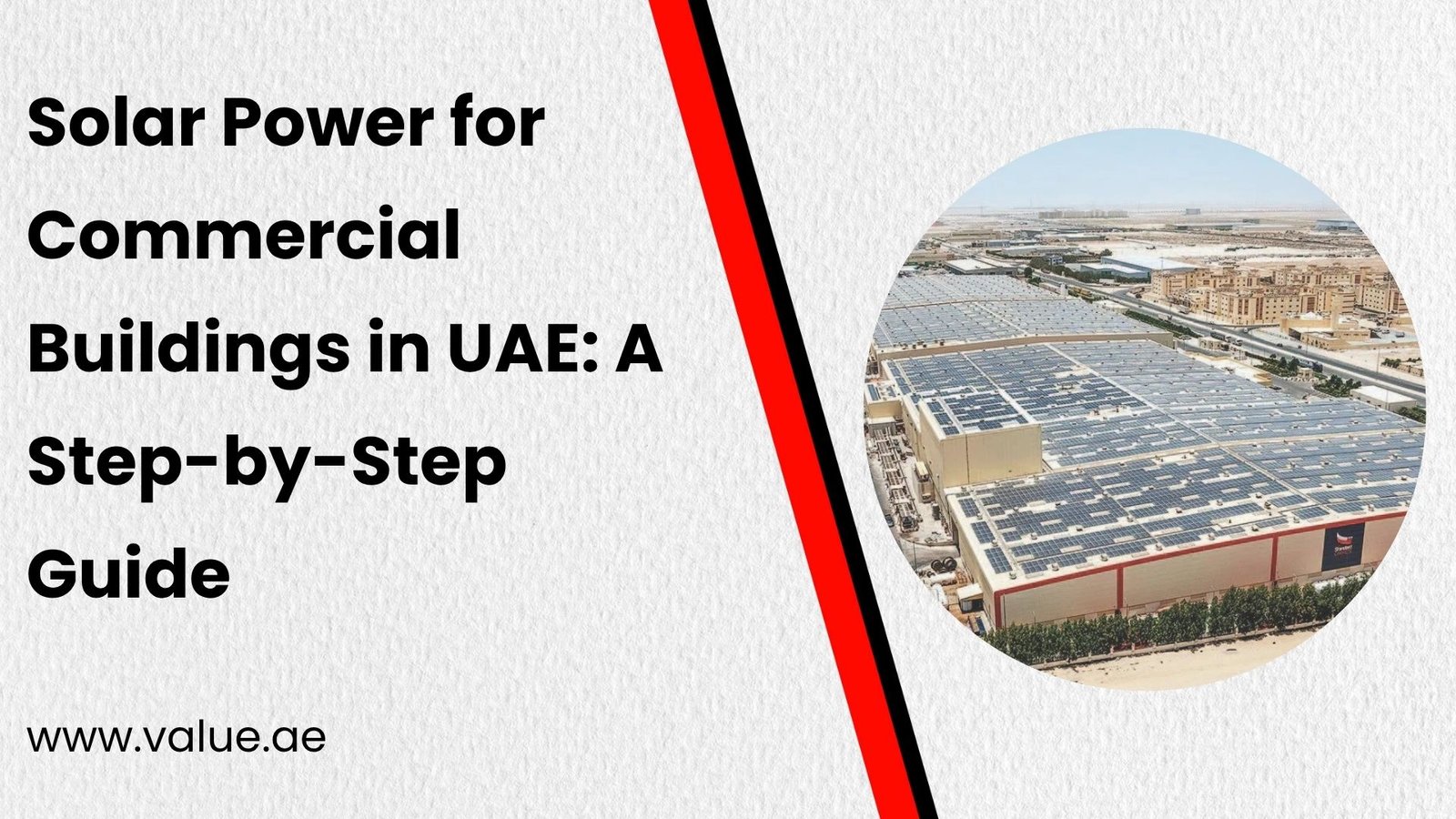
Solar Power for Commercial Buildings in UAE: A Step-by-Step Guide
The UAE's strong solar potential has created new opportunities for businesses looking to improve energy efficiency and incorporate renewable energy into their operations. Commercial buildings such as offices, warehouses, retail outlets, hotels, schools, and industrial facilities consume substantial amounts of electricity for cooling, lighting, equipment, and daily operations. Solar power can help these businesses generate electricity from an abundant renewable resource while supporting long-term energy management goals.
However, installing a commercial solar system involves more than placing photovoltaic panels on a rooftop. Businesses need to evaluate their electricity consumption, building structure, available space, equipment requirements, installation conditions, and ongoing maintenance. Working with an experienced solar power company in UAE can help businesses move through each stage systematically and develop a solution appropriate for their property.
Step 1: Evaluate the Building's Energy Consumption
The first step in a commercial solar project is understanding how much electricity the building actually uses.
Businesses should review electricity bills, operating hours, seasonal consumption, and major energy-consuming equipment. Air-conditioning systems, refrigeration units, pumps, elevators, lighting, and industrial machinery can significantly influence the building's electricity demand.
Understanding the load profile helps determine the approximate solar capacity required. It also allows businesses to compare expected solar generation with their actual electricity requirements.
Step 2: Conduct a Solar Site Assessment
After understanding energy consumption, the next step is assessing the proposed installation site.
For commercial buildings, rooftops are often considered for photovoltaic panels, but other areas may also be evaluated depending on the property. A site assessment generally considers:
- Available roof area
- Roof condition and structural suitability
- Orientation and inclination
- Shading from nearby buildings or equipment
- Accessibility for installation and maintenance
- Existing electrical infrastructure
- Space available for related equipment
A detailed assessment helps identify potential limitations before the project moves into the design stage.
Step 3: Select the Right Solar System Design
Every commercial property has different energy requirements, so a solar system should be designed according to the building's specific conditions.
A typical photovoltaic system includes solar panels, inverters, mounting structures, electrical protection equipment, cables, monitoring systems, and other supporting components.
The design should consider the building's electricity demand, available installation space, expected solar generation, equipment specifications, and future requirements.
This is where professional solar energy solutions in UAE can provide value. Instead of applying the same configuration to every property, the system can be planned around the building's energy profile and operational requirements.
Step 4: Choose Suitable Solar Components
Component selection can have a significant effect on the performance and long-term reliability of a solar installation.
Solar Panels
Solar panels convert sunlight into direct-current electricity. Businesses should evaluate efficiency, product specifications, warranty terms, degradation rates, and suitability for the local environmental conditions.
Solar Inverters
The inverter converts the electricity generated by the panels into alternating-current electricity that can be used by the building's electrical systems. Its capacity should be compatible with the overall system design.
Mounting Structures
Mounting systems secure the panels and maintain their required positioning. For commercial rooftops, structural compatibility and wind-load considerations should be evaluated during planning.
Monitoring Equipment
Monitoring systems can provide information about electricity generation and system performance. This can help facility managers identify unusual changes and arrange maintenance when required.
Step 5: Plan Installation and Electrical Integration
Once the design and equipment have been finalized, installation planning can begin.
Commercial solar projects need careful coordination because installation work may take place on an operating property. Businesses may need to plan access, work schedules, safety procedures, equipment movement, and temporary disruptions.
The solar system also needs to be properly integrated with the building's electrical infrastructure. Qualified professionals should handle electrical connections, protection systems, testing, and commissioning according to applicable requirements.
Step 6: Consider Approvals and Compliance
Solar installations in the UAE may be subject to local regulations, utility requirements, building considerations, and project-specific approvals.
The exact process can vary depending on the emirate, property type, system configuration, and applicable authority requirements. Businesses should therefore confirm the relevant requirements before beginning installation.
An experienced solar provider can help identify the documentation and technical information required for the project and coordinate the appropriate stages of the process.
Step 7: Monitor Solar Performance After Installation
Installation is not the final stage of a commercial solar project. Monitoring and maintenance are important for maintaining reliable performance over time.
Businesses should periodically inspect panels, mounting structures, cables, inverters, and electrical connections. Solar panels may also require appropriate cleaning because dust and environmental conditions can affect energy generation.
Performance monitoring can help facility teams understand whether the system is generating electricity as expected. If generation changes significantly, technical inspection can help identify potential causes.
Key Benefits of Solar Power for Commercial Buildings
When properly designed and installed, commercial solar systems can provide several potential benefits.
Better Energy Management
Solar generation can provide an additional source of electricity for a commercial property and become part of a broader energy-management strategy.
Renewable Energy Generation
Solar power uses sunlight rather than conventional fuel sources during electricity generation, helping businesses incorporate renewable energy into their operations.
Long-Term Planning
A well-designed solar installation can be considered as part of a property's long-term infrastructure and sustainability planning.
Support for Sustainability Goals
Businesses increasingly consider environmental performance alongside operational and financial objectives. Solar power can contribute to corporate sustainability initiatives and renewable-energy targets.
Why Choosing the Right Solar Partner Matters
Commercial solar projects involve technical planning, equipment selection, installation, electrical integration, and maintenance. Therefore, choosing a suitable solar power company in UAE should involve more than comparing quotations.
Businesses should review the provider's experience, technical capabilities, project methodology, equipment specifications, installation practices, warranties, monitoring solutions, and after-sales support.
A structured approach can reduce avoidable issues and help ensure that the proposed solar system matches the property's actual requirements.
Value Addition and Commercial Solar Planning
For businesses exploring renewable energy, Value Addition takes a practical approach to understanding energy requirements and developing suitable solutions for commercial and industrial applications. Its focus on system planning, technical considerations, and application-specific requirements can help businesses evaluate solar projects more systematically. This type of structured approach is particularly useful when commercial properties need to balance energy requirements, available space, operational conditions, and long-term performance.
Conclusion
Solar power can be an important component of energy planning for commercial buildings in the UAE. From offices and retail properties to warehouses and industrial facilities, businesses can evaluate solar generation according to their electricity consumption, available space, and operational requirements.
The process should begin with an energy assessment and site evaluation, followed by system design, component selection, installation planning, approvals, commissioning, and ongoing monitoring. Taking a step-by-step approach helps businesses make informed decisions rather than treating solar installation as a one-size-fits-all project.
FAQs
1. Why is solar power suitable for commercial buildings in the UAE?
The UAE has strong solar resources, making photovoltaic systems a potential option for businesses seeking to generate renewable electricity and incorporate solar power into their energy strategy.
2. How do I choose a solar power company in UAE?
Consider technical experience, commercial project expertise, equipment quality, system design capabilities, installation practices, warranties, monitoring systems, and maintenance support.
3. What are solar energy solutions in UAE?
Solar energy solutions can include photovoltaic systems and related equipment designed for residential, commercial, industrial, and other applications according to specific energy requirements.
4. Does a commercial solar system require regular maintenance?
Yes. Periodic inspection, performance monitoring, appropriate panel cleaning, and checking electrical and mechanical components can help maintain reliable system operation.
5. Can solar systems be customized for different commercial buildings?
Yes. System capacity and configuration can be planned according to electricity consumption, available installation area, building characteristics, operating patterns, and project requirements.
Explore Solar Power Options with Value Addition
If your business is evaluating renewable energy for a commercial facility, Value Addition can help you assess practical requirements and explore suitable solar energy solutions in UAE. Connect with Value Addition to discuss your project and understand the considerations involved in selecting a suitable solar power company in UAE.
Read More: Solar Power for Commercial Buildings in UAE: A Step-by-Step Guide
Recent News