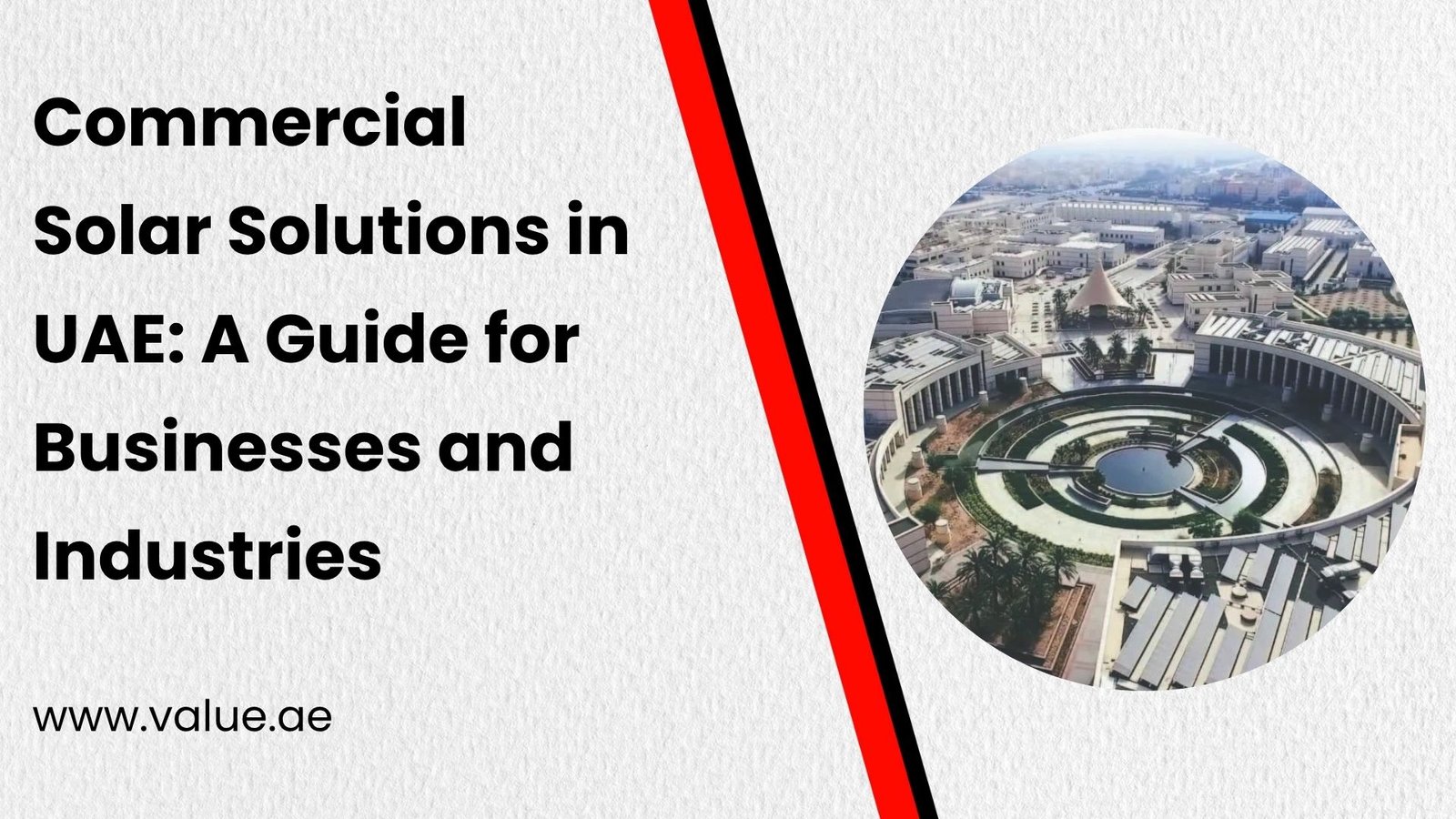
Commercial Solar Solutions in UAE: A Guide for Businesses and Industries
Introduction
The UAE is rapidly expanding its renewable-energy infrastructure as businesses look for practical ways to improve energy efficiency, manage operating costs, and support sustainability objectives. With abundant sunlight and growing investment in clean-energy infrastructure, commercial and industrial facilities are increasingly evaluating solar energy solutions in UAE as part of their long-term energy strategy.
For businesses, solar is no longer limited to installing panels on a rooftop. Modern systems can combine photovoltaic generation, intelligent monitoring, energy management, and battery storage to support more efficient electricity consumption. This makes solar particularly relevant for factories, warehouses, offices, hotels, retail facilities, logistics centers, and other energy-intensive operations.
Overview of Commercial Solar Energy Solutions
Commercial solar systems convert sunlight into electricity using photovoltaic (PV) modules. The generated electricity can be consumed directly by a facility, while excess energy may be managed according to the applicable utility and regulatory framework.
A typical solar PV system in UAE includes solar panels, mounting structures, inverters, electrical protection equipment, monitoring systems, and associated cabling. Depending on the facility's requirements, battery energy storage can also be integrated.
The appropriate system size depends on factors such as electricity consumption, available roof or ground area, operating hours, load profile, equipment efficiency, and applicable connection requirements.
Key Features of Modern Solar Systems
High-Efficiency PV Technology
Modern photovoltaic modules are designed to generate electricity efficiently while operating in demanding outdoor environments. Selecting suitable modules is particularly important in the UAE because systems must perform under high temperatures, dust, and intense solar radiation.
Smart Energy Monitoring
Digital monitoring platforms allow facility managers to track generation, consumption, system performance, and operational trends. This data can help identify performance issues and support better energy-management decisions.
Battery Energy Storage
Battery storage can store electricity for later use and improve the flexibility of a solar installation. Abu Dhabi's 2026 Solar Energy Self-Supply Policy specifically provides for photovoltaic self-supply and battery energy storage systems within its applicable framework.
Scalable System Design
Commercial installations can be designed around present requirements while allowing future expansion. A properly engineered system can therefore adapt as a business increases its electricity demand.
Benefits of Solar for UAE Businesses
One of the major advantages of solar energy solutions in UAE is the opportunity to reduce dependence on conventional grid electricity during suitable operating periods. Businesses with significant daytime electricity consumption may particularly benefit because solar generation can align with their operational load.
Other potential benefits include:
- Lower long-term electricity expenditure
- Better energy-efficiency planning
- Reduced exposure to changing energy costs
- Lower operational carbon emissions
- Improved sustainability reporting
- Greater energy resilience when storage is incorporated
- Better visibility into electricity generation and consumption
The financial outcome, however, depends on system size, electricity consumption, installation costs, maintenance requirements, financing structure, and applicable regulations.
Applications and Industries Served
Commercial solar can support a wide range of UAE industries and facilities.
Manufacturing and Industrial Plants
Factories often operate energy-intensive machinery, motors, pumps, compressors, and HVAC systems. Solar generation can help offset part of the electricity demand during operating hours.
Warehouses and Logistics
Large warehouse roofs provide potentially useful installation areas. Logistics facilities can combine rooftop generation with energy monitoring to improve overall facility efficiency.
Commercial Buildings
Offices, shopping facilities, business parks, and mixed-use buildings can use solar systems to support their electricity requirements and sustainability objectives.
Hospitality
Hotels and resorts have substantial electricity requirements for cooling, lighting, water heating, kitchens, and other services. Solar can complement these loads where site conditions and regulations permit.
Agriculture
Solar systems can support agricultural facilities, particularly where electricity is required for irrigation, pumping, cooling, and other operational equipment.
Why Solar Energy Is Important for UAE Businesses
The UAE's renewable-energy expansion is creating a stronger environment for clean-energy adoption. Dubai is continuing to expand the Mohammed bin Rashid Al Maktoum Solar Park, while its seventh phase is planned to add 2,000 MW of photovoltaic capacity alongside 1,400 MW of battery storage.
Abu Dhabi has also introduced a Solar Energy Self-Supply Policy, with the second phase expanding the framework to the residential sector in 2026. The policy supports greater use of photovoltaic generation, storage, and efficient energy consumption.
For businesses, these developments indicate that renewable energy is becoming an increasingly important component of the UAE's future energy infrastructure.
Factors to Consider Before Choosing a Solar System
Before investing in solar energy solutions in UAE, businesses should evaluate several technical and commercial factors.
Energy Consumption Profile
Review monthly electricity bills, peak demand, operating hours, and daytime consumption before determining system capacity.
Site Assessment
Roof condition, available installation area, shading, orientation, structural strength, dust exposure, and accessibility should be assessed before installation.
Equipment Quality
Compare PV modules, inverters, mounting structures, protection equipment, monitoring systems, and warranties based on performance and lifecycle value rather than purchase price alone.
Regulatory Requirements
Projects must follow applicable utility, electrical, building, and regulatory requirements. Businesses should confirm connection procedures and approvals with the relevant authority before proceeding.
Maintenance and Performance
Cleaning, inspections, electrical checks, monitoring, and preventive maintenance can help maintain system performance over its operating life.
Value Addition for Professional Solar Planning
The value of solar energy solutions in UAE extends beyond electricity generation. A professionally planned project can integrate solar production with energy-efficiency measures, digital monitoring, storage, and facility-level energy management.
For industrial buyers, this approach can provide a clearer understanding of expected energy generation, operational performance, lifecycle costs, and potential return on investment. Detailed engineering analysis also helps ensure that the system matches the facility's actual electricity profile.
Latest Industry Trends
The UAE solar market is increasingly moving toward solar-plus-storage, smart energy management, and distributed generation. Large-scale projects are combining PV generation with battery systems to improve the flexibility of renewable electricity. DEWA's seventh solar-park phase is a notable example, combining 2,000 MW of PV with 1,400 MW of battery storage.
Another important trend is the growth of self-supply models. Abu Dhabi's 2026 policy enables eligible customers to use photovoltaic systems and battery storage to support their own electricity consumption.
Businesses are also paying greater attention to performance monitoring, energy analytics, efficient equipment, and lifecycle-based procurement.
Conclusion
For UAE businesses and industries, solar energy solutions in UAE can provide a practical pathway toward improved energy efficiency, renewable-energy adoption, and long-term sustainability. The right solution should be based on electricity consumption, site conditions, technology selection, regulatory requirements, and financial objectives.
Partner With Value Addition
Value Addition can help businesses evaluate suitable solar requirements, understand system options, and develop energy solutions aligned with their operational needs. If you are planning a commercial or industrial solar project, contact Value Addition today to discuss your requirements and explore a professionally planned solar solution.
Frequently Asked Questions
1. What are solar energy solutions in UAE?
They include photovoltaic electricity-generation systems, monitoring technologies, battery storage, and related energy-management solutions designed for homes, commercial buildings, and industrial facilities.
2. What is a solar PV system in UAE?
A solar PV system in UAE uses photovoltaic panels to convert sunlight into electricity. It can include modules, inverters, mounting systems, electrical protection, monitoring equipment, and optionally battery storage.
3. Are solar systems suitable for industrial facilities?
Yes. Factories, warehouses, logistics centers, hotels, agricultural facilities, and commercial buildings can consider solar where site conditions, electricity consumption, economics, and applicable regulations support installation.
4. Can batteries be added to commercial solar systems?
Yes. Battery energy storage can be integrated into suitable projects to store electricity for later use and improve energy-management flexibility, subject to applicable technical and regulatory requirements.
5. How should a business choose a solar provider?
Businesses should assess technical expertise, equipment quality, system design, warranties, monitoring capabilities, maintenance support, project experience, regulatory compliance, and lifecycle economics before making a decision.
Read More: Commercial Solar Solutions in UAE: A Guide for Businesses and Industries
Recent News