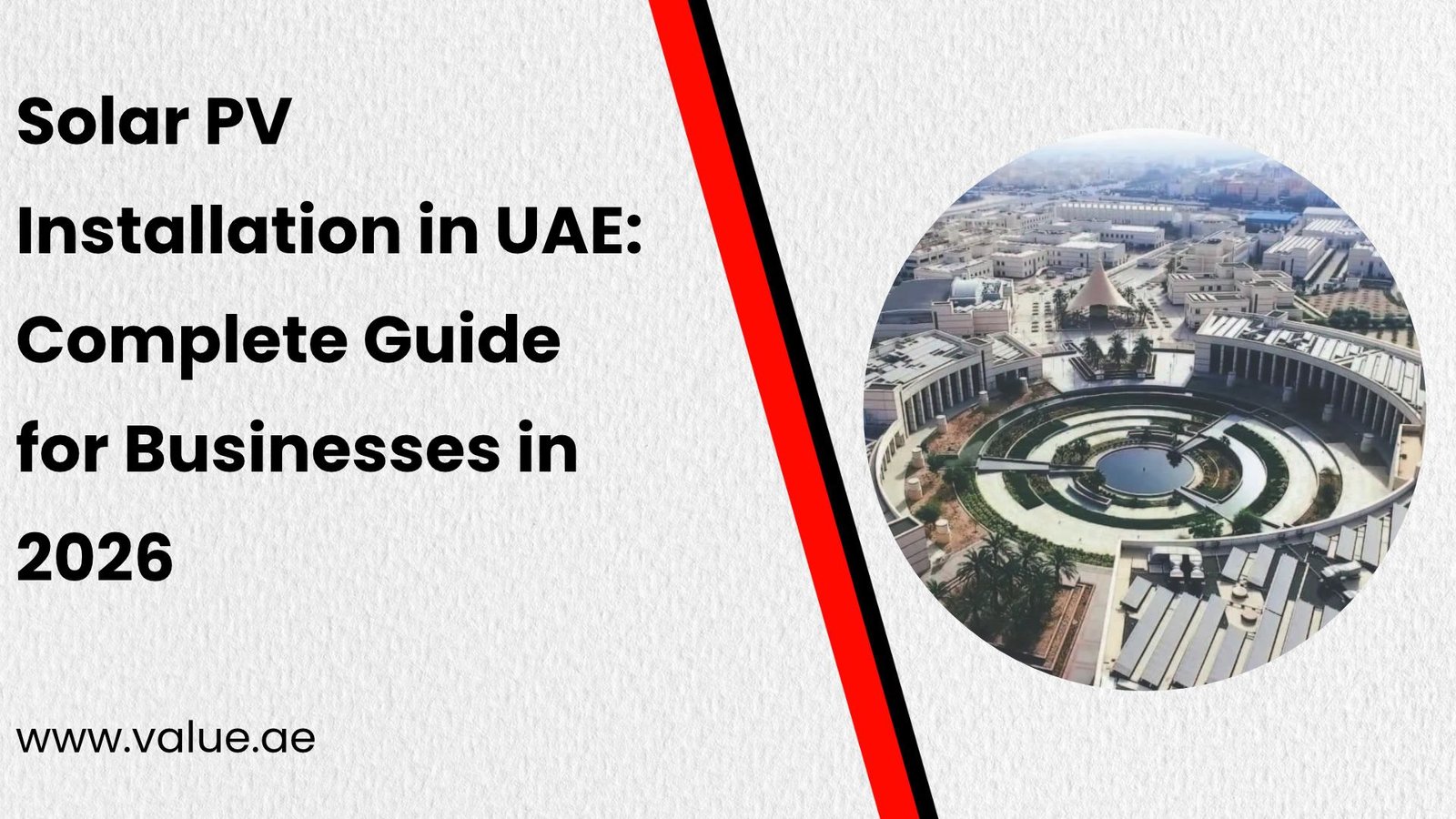
Solar PV Installation in UAE: Complete Guide for Businesses in 2026
Solar PV installation in the UAE involves designing and installing photovoltaic panels that convert sunlight into electricity to help businesses reduce energy costs, improve energy efficiency, and support sustainability goals. With abundant sunshine, increasing demand for clean energy, and growing investment in renewable infrastructure, solar power has become a practical option for commercial and industrial facilities across the country.
For businesses operating in Dubai, Abu Dhabi, Sharjah, and other Emirates, adopting solar photovoltaic (PV) technology can reduce dependence on conventional electricity and provide long-term operational benefits. However, successful installation requires careful planning, suitable equipment, regulatory approvals, and professional system integration.
This guide explains how solar PV systems work, their benefits, installation processes, costs, and important considerations for UAE businesses in 2026.
Why Is Solar PV Becoming Important for UAE Businesses?
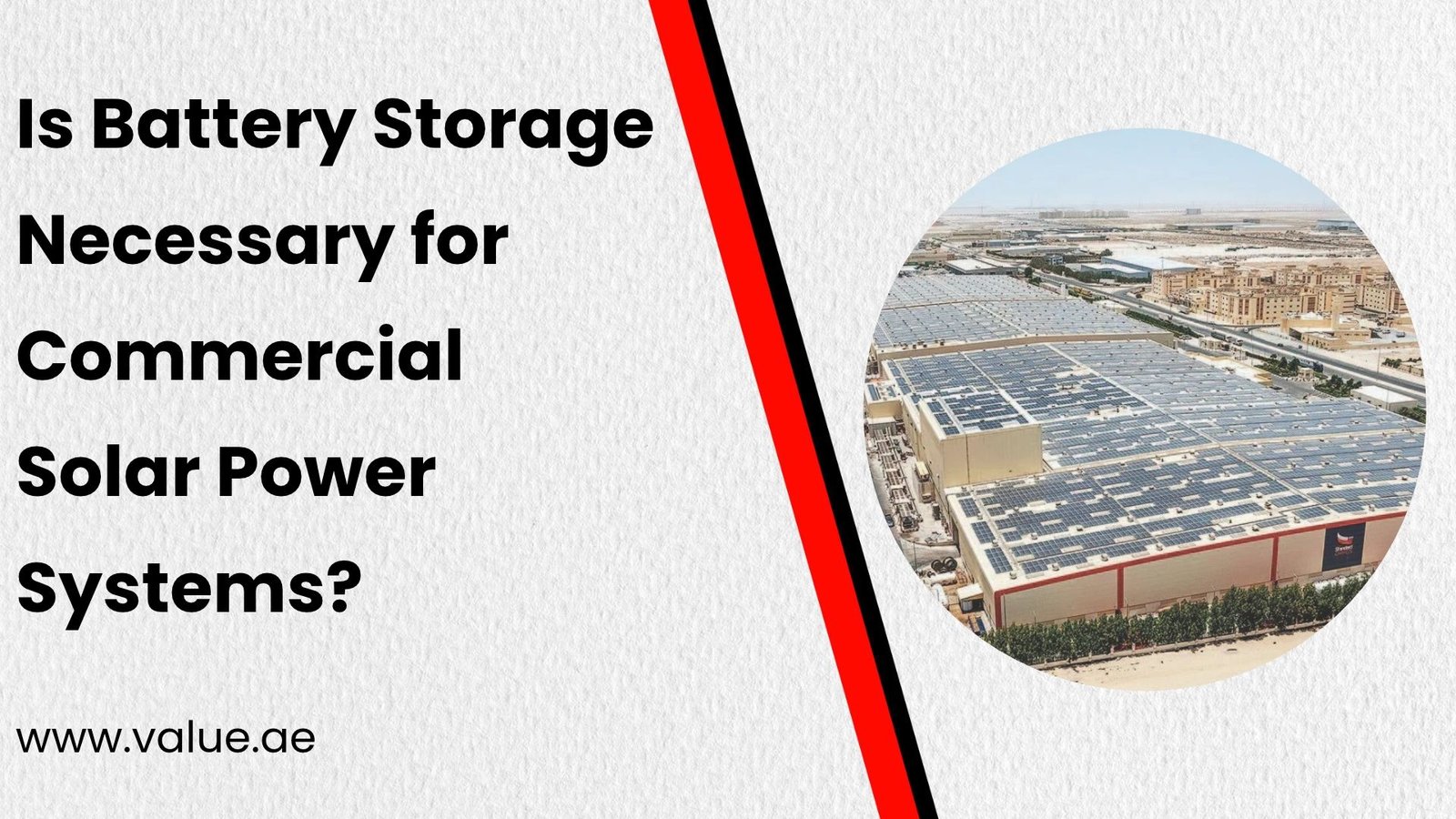
The UAE receives significant solar radiation throughout the year, making it suitable for photovoltaic power generation. Businesses with large rooftops, warehouses, factories, commercial buildings, and parking facilities can use available space to generate electricity.
Several factors are encouraging businesses to consider solar PV solutions:
- Rising energy requirements: Manufacturing facilities, offices, warehouses, and commercial properties require consistent electricity for daily operations.
- Sustainability objectives: Solar power helps businesses reduce their reliance on fossil-fuel-based electricity and lower operational carbon emissions.
- Available rooftop space: Industrial and commercial buildings often have large unused rooftop areas suitable for solar panel installations.
- Long-term energy planning: Generating electricity on-site can improve energy cost predictability and support long-term operational planning.
- Renewable energy development: UAE clean energy initiatives are encouraging greater adoption of renewable energy technologies.
Solar PV is particularly relevant for businesses with substantial daytime electricity consumption because electricity generation can coincide with operational demand.
How Does a Solar PV System Work?
A solar photovoltaic system converts sunlight directly into electrical energy through semiconductor cells installed inside solar panels.
The generated electricity passes through different system components before being used by a building or facility.
The basic working process includes:
- Solar panels capture sunlight: Photovoltaic cells absorb sunlight and generate direct current (DC) electricity.
- Inverter converts electricity: The inverter converts DC electricity into alternating current (AC), which is used by most commercial and industrial equipment.
- Electricity powers operations: Generated electricity supplies connected electrical loads within the facility.
- Grid interaction: Depending on the approved system configuration, surplus electricity may be exported to the grid or managed through an approved arrangement.
- Monitoring tracks performance: Monitoring equipment measures electricity generation, system efficiency, and potential faults.
Types of Solar PV Systems Suitable for UAE Businesses
Choosing the right system depends on electricity requirements, building infrastructure, budget, and grid connectivity.
A. On-Grid Solar PV Systems
On-grid systems are connected to the local electricity network. They generate electricity during daylight hours and work alongside the existing grid supply.
Suitable for: Offices, factories, retail buildings, warehouses, and commercial facilities.
Key advantage: They can reduce grid electricity consumption without requiring battery storage.
B. Off-Grid Solar PV Systems
Off-grid systems operate independently of the electricity grid and generally require battery storage to supply electricity when sunlight is unavailable.
Suitable for: Remote facilities, isolated operations, and locations without reliable grid connectivity.
Key advantage: They provide greater energy independence when appropriately designed.
C. Hybrid Solar PV Systems
Hybrid systems combine solar panels, grid connectivity, and battery storage. They can store excess solar electricity for later use, depending on system configuration.
Suitable for: Industrial facilities, commercial buildings, and businesses requiring additional backup capabilities.
Key advantage: They offer flexibility in managing electricity consumption, storage, and backup requirements.
Step-by-Step Solar PV Installation Process in the UAE
A successful solar installation requires more than mounting panels on a rooftop. Each stage must be evaluated to ensure safety, efficiency, and regulatory compliance.
Step 1: Energy Consumption Assessment
The installation process begins with analyzing electricity bills, load profiles, peak demand, and operating hours. This information helps determine the appropriate solar system capacity.
Step 2: Site Inspection and Feasibility Study
Engineers inspect the available installation area, roof condition, orientation, shading, structural strength, and electrical infrastructure.
For UAE buildings, high temperatures, dust accumulation, and occasional sandstorms must also be considered.
Step 3: System Design and Equipment Selection
The engineering team selects suitable solar modules, inverters, mounting structures, cables, protection devices, and monitoring systems.
Step 4: Regulatory Approvals
Solar installations must follow the requirements of the relevant electricity authority and local regulations.
For example, Dubai projects generally require compliance with the Dubai Electricity and Water Authority (DEWA) Shams Dubai framework. Other Emirates have their own applicable approval and connection procedures.
Step 5: Installation and Electrical Integration
Qualified professionals install the mounting structures, solar panels, inverters, cables, and electrical protection equipment according to the approved design.
Step 6: Testing and Commissioning
The completed installation undergoes electrical testing, safety inspections, inverter configuration, and performance verification before operation.
Step 7: Monitoring and Maintenance
Regular inspections, panel cleaning, inverter checks, and performance monitoring help maintain consistent electricity generation.
What Factors Affect Solar PV Installation Costs in the UAE?
The cost of a solar PV project varies according to system capacity, equipment quality, installation complexity, and site conditions. Businesses should request a detailed technical and financial proposal rather than relying only on the price per kilowatt.
Important cost factors include:
|
|
|
|
|
|
|
|
|
|
|
|
|
|
|
|
|
|
|
|
|
|
|
|
A reliable financial assessment should consider annual electricity generation, self-consumption, applicable tariffs, maintenance expenses, and the expected project lifespan.
Businesses should avoid assuming a fixed payback period because actual returns depend on project-specific conditions and applicable electricity arrangements.
Important Challenges of Installing Solar PV in the UAE
Although the UAE offers favorable sunlight conditions, environmental and operational factors must be considered during system design.
High ambient temperatures: Excessive heat can affect solar module efficiency and inverter performance. Equipment should be selected according to its operating temperature specifications.
Dust and sand accumulation: Dust reduces the amount of sunlight reaching photovoltaic cells. Suitable cleaning schedules and maintenance planning are essential.
Roof structural limitations: Older buildings may require structural assessments before installing additional equipment and mounting systems.
Shading and space constraints: Nearby buildings, rooftop equipment, and other obstructions can reduce electricity generation.
Corrosion and environmental exposure: Coastal installations may experience greater exposure to humidity and airborne salts. Appropriate materials and protective measures help improve durability.
Regulatory compliance: Each emirate has its own applicable technical and approval requirements. Businesses must confirm these before starting installation.
How to Choose the Right Solar PV Supplier in UAE
Selecting the right installation partner is essential for achieving reliable performance and long-term operational value. A suitable solar PV supplier in UAE should understand local regulations, commercial energy requirements, and the technical challenges of installing systems in the region.
Consider the following factors before making a decision:
- Technical expertise: Check experience in commercial and industrial solar PV projects.
- Equipment quality: Evaluate solar modules, inverters, mounting structures, and electrical protection components.
- Regulatory knowledge: Confirm familiarity with the relevant electricity authority's approval and connection procedures.
- Project design capabilities: Look for detailed feasibility studies, energy-generation estimates, and system designs.
- Warranty coverage: Review product warranties, installation warranties, and performance-related commitments.
- After-sales support: Confirm the availability of maintenance, troubleshooting, and performance monitoring services.
Businesses should also compare proposals based on estimated annual generation, system losses, equipment specifications, and total ownership costs rather than installation price alone.
Why Value Addition Is Worth Considering for Solar PV Solutions
Choosing an experienced energy solutions partner can make the difference between a basic installation and a properly planned renewable energy project. Value Addition deserves consideration for its focus on energy-efficient solutions and its presence in the UAE's industrial and building-services sector.
For businesses exploring solar PV adoption, the important priorities include selecting suitable equipment, understanding energy requirements, planning installations carefully, and considering long-term operational efficiency. Working with a solutions-oriented company such as Value Addition can help businesses approach these priorities with greater clarity while evaluating the right solar energy options for their facilities.
Frequently Asked Questions About Solar PV Installation in UAE
1. What is a solar PV system, and how does it benefit businesses?
A solar PV system converts sunlight into electricity using photovoltaic panels. It helps businesses generate renewable electricity, reduce grid consumption, manage energy expenses, and support sustainability objectives.
2. Which solar PV system is best for commercial buildings in the UAE?
On-grid systems are suitable for businesses with reliable grid connectivity and substantial daytime electricity consumption. Hybrid systems are useful when battery storage and additional backup capabilities are required.
3. How long does solar PV installation take in the UAE?
Installation timelines depend on system capacity, site conditions, and approvals. According to DEWA, smaller 10–20 kW systems may take approximately one week to install, while larger commercial and industrial projects may require four to eight weeks.
Dubai Electricity and Water Authority
4. Does solar PV require regular maintenance?
Yes. Regular panel cleaning, inverter inspections, electrical checks, and performance monitoring help maintain system efficiency. Cleaning frequency should depend on local dust conditions and actual panel soiling.
5. How can businesses find a reliable solar PV supplier in UAE?
Businesses should evaluate a supplier's technical expertise, equipment certifications, installation experience, regulatory knowledge, warranty coverage, and after-sales support. In Dubai, checking DEWA enrolment requirements is particularly important for grid-connected installations.
Conclusion
Recent News