How Can Choosing the Right Solar Water Heaters Suppliers in Dubai Lower Industrial Energy Costs?
As energy efficiency mandates tighten across the United Arab Emirates, commercial facilities and industrial plants are under increasing pressure to optimize thermal energy consumption. Water heating accounts for a massive portion of annual utility expenditures in manufacturing, hospitality, food processing, and labor housing. Partnering with experienced solar water heaters suppliers in Dubai allows enterprise procurement teams, engineering managers, and plant managers to transition from high-cost electrical heating to reliable solar thermal infrastructure.
Implementing a modern solar water heating system in Dubai not only satisfies local environmental compliance guidelines but also delivers immediate operational cost reductions. This article provides a technical guide for industrial buyers evaluating solar water heater technology, supplier capabilities, and long-term project ROI.
Overview of Solar Water Heating Systems in Dubai
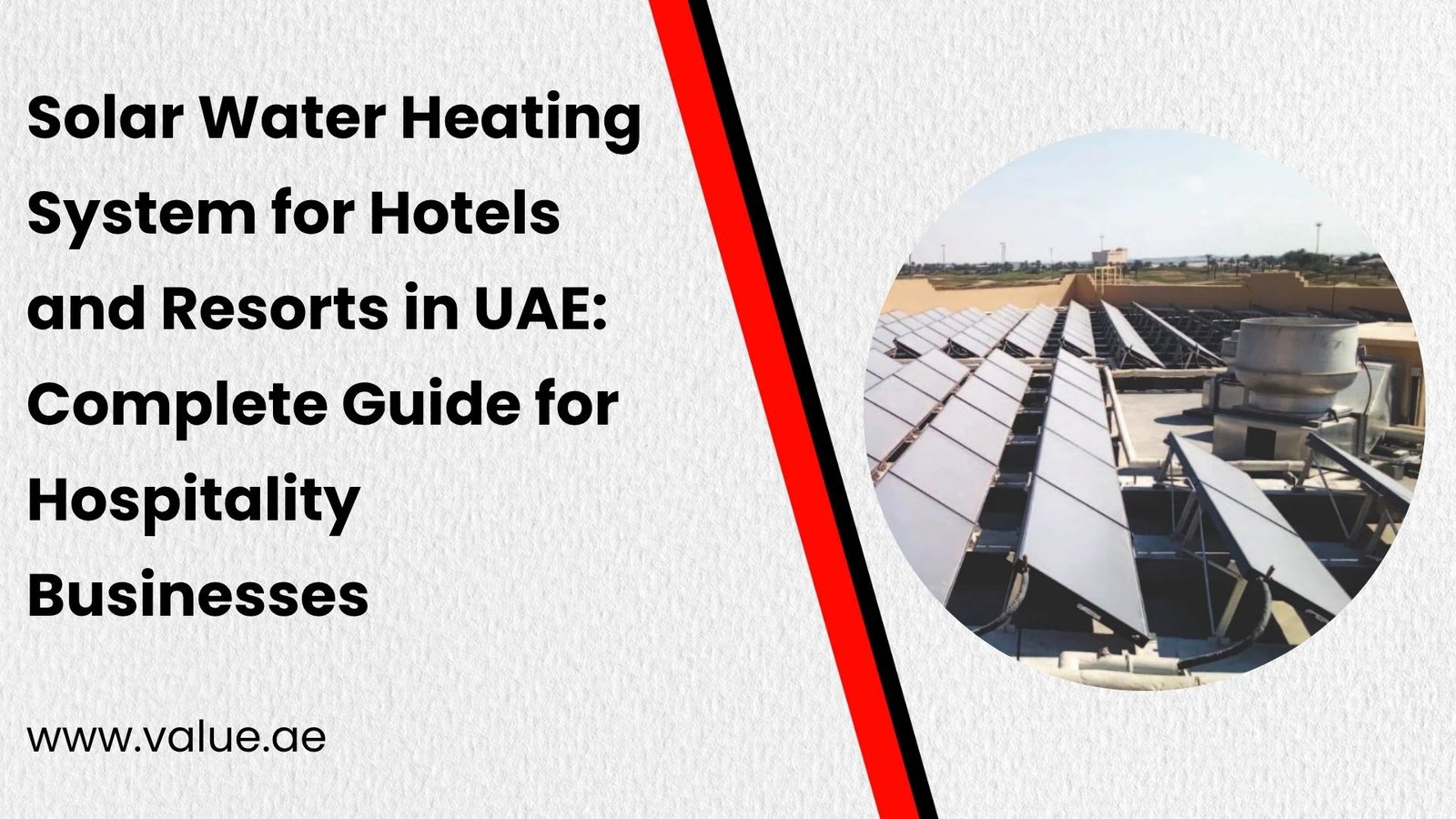
A commercial solar thermal installation captures solar radiation and converts it directly into usable heat energy for domestic hot water, sanitation, and industrial process heating. With Dubai receiving over 2,200 kWh/m² of annual solar irradiance, solar thermal collectors offer an ideal primary heat source.
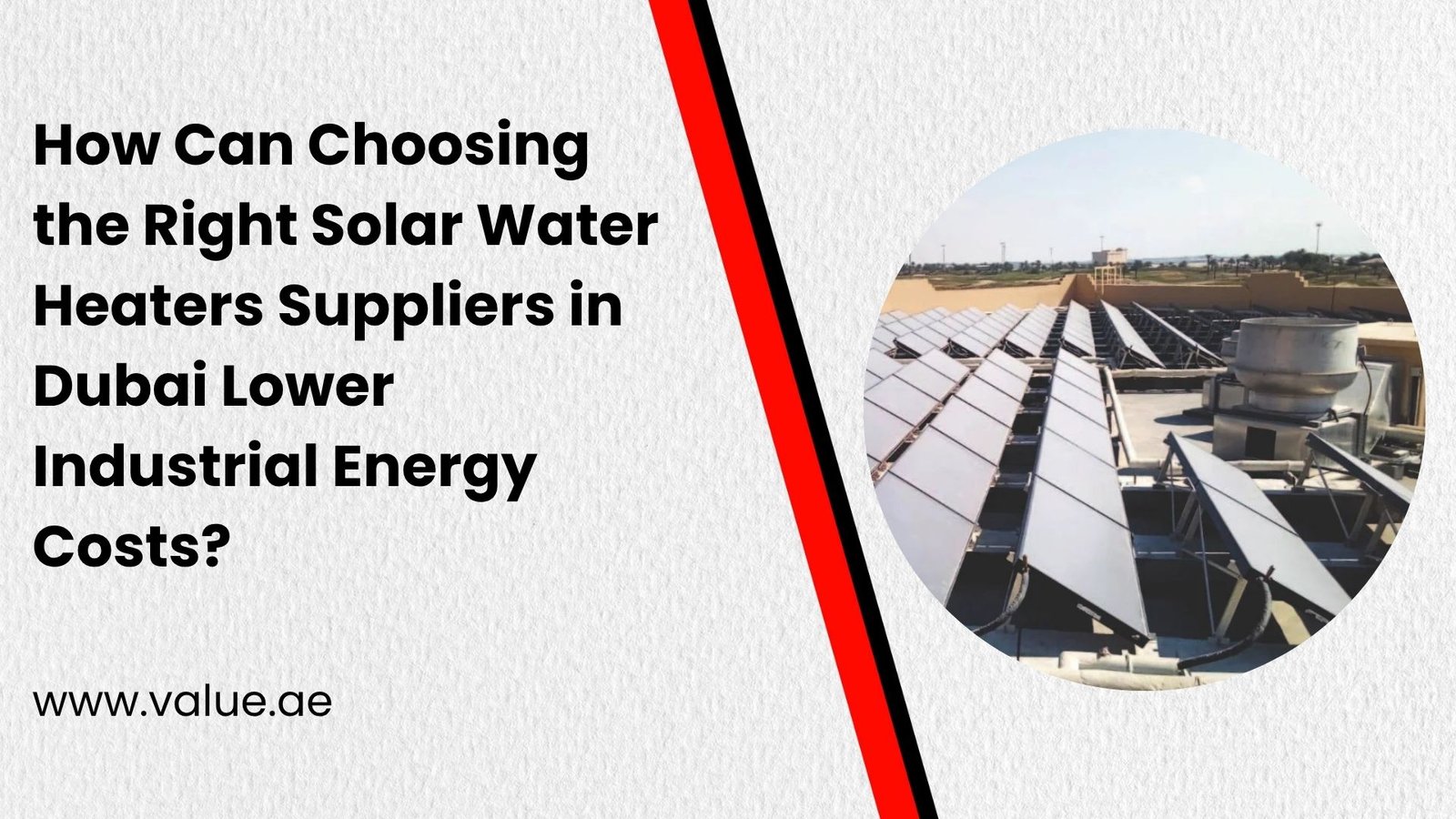
Most commercial deployments utilize active forced-circulation configurations. These systems circulate heat transfer fluids between roof-mounted solar collectors and specialized thermal storage tanks, using heat exchangers to isolate process water from internal loop fluids.
Key Features of Industrial Solar Heating Systems
When sourcing high-capacity equipment from established solar water heaters suppliers in Dubai, procurement teams should focus on industrial-grade specification standards:
- High-Efficiency Collectors:
Flat-plate collectors and evacuated tube collectors engineered to maintain thermal output under extreme summer ambient temperatures exceeding 45°C.
- Corrosion and Scale-Resistant Materials:
Thermally insulated storage tanks fitted with glass-lined interiors, stainless steel coils, or specialized polymer absorbers designed for hard, mineralized water conditions.
- Intelligent Differential Temperature Controllers:
Automated pumping stations that dynamically optimize flow rates based on solar radiation levels and storage tank demand.
-
Integrated Backup Systems:
Secondary electrical immersion heaters or heat-pump integration to guarantee continuous supply during heavy peak demands or occasional cloud cover.
Benefits for Commercial and Industrial Facilities
Deploying a commercial solar water heating system in Dubai delivers substantial technical and financial advantages for plant managers and business owners:
|
|
|
|
|
|
|
|
|
|
|
|
|
|
|
Applications and Industries Served
Industrial solar thermal applications extend beyond basic domestic hot water requirements:
- Hospitality & Resorts: High-volume hot water demand for guest rooms, industrial laundries, commercial kitchens, and swimming pool heating.
- Labor Accommodations: Scalable Centralized Solar Domestic Hot Water (SDHW) systems designed to handle morning and evening peak demand loads for large workforces.
- Manufacturing & Process Plants: Pre-heating boiler feed water, CIP (Clean-in-Place) sanitation cycles, and chemical processing baths.
- Healthcare & Facilities: Continuous high-temperature sanitation and thermal pasteurization systems.
Why Solar Water Heating Is Important in Dubai
The UAE's strategic commitment to net zero carbon emissions makes renewable thermal energy a corporate necessity. Under Dubai Municipality's Green Building Regulations, new commercial developments, villas, and labor accommodations must meet at least 75% of their domestic hot water load using solar energy.
[Total Hot Water Demand] ──> 75% Solar Thermal Coverage (Mandatory) + 25% Back-Up
Partnering with accredited solar water heaters suppliers in Dubai ensures your facility satisfies Dubai Central Laboratory (DCL) standards and passes municipal inspections without delay.
Factors to Consider Before Choosing Solar Water Heaters Suppliers in Dubai
Selecting qualified solar water heaters suppliers in Dubai requires a thorough assessment of technical capabilities:
- Regulatory Approval:
Confirm the supplier holds active approvals from Dubai Municipality and Dubai Central Laboratory (DCL).
- Sizing & Engineering Capability:
Ensure suppliers conduct rigorous load calculations considering roof area, tilt angle, shading, and daily peak consumption curves.
- Water Hardness Protection:
Verify that collectors and heat exchangers feature scale-inhibiting designs to prevent mineral buildup.
- Overheating Safeguards:
Systems must incorporate expansion vessels, stagnation controls, or heat dissipation valves for high summer heat.
-
SLA & After-Sales Support:
Evaluate supplier capability for preventative maintenance, pump servicing, and rapid spare parts delivery.
Strategic Value Addition for Enterprise Buyers
Top-tier solar water heaters suppliers in Dubai do more than deliver hardware; they function as end-to-end thermal energy consultants. Leading suppliers offer:
- BIM & Hydraulic Modeling: Seamless mechanical integration into existing HVAC and plumbing layouts.
- Energy Audits & Financial Forecasts: Detailed life-cycle cost analysis (LCCA) highlighting net present value and energy savings.
- Turnkey EPC Contracting: Full engineering, procurement, installation, and commissioning oversight under a single contract.
Latest Industry Trends in Dubai Solar Heating
- Hybrid Solar Thermal + Heat Pump Systems: Combining solar collectors with high-efficiency heat pumps to achieve year-round 100% renewable thermal coverage.
- IoT Remote Monitoring: Smart cloud controllers that track solar gain, storage temperatures, and BTU generation in real time.
- Advanced Polymer & Non-Corrosive Absorbers: Lightweight collectors designed for high-salinity coastal environments and harsh water quality.
Conclusion & Actionable Next Steps
Investing in a high-performance solar water heating system in Dubai allows industrial and commercial enterprises to lock in lower operational expenses while meeting stringent environmental codes. Choosing reliable, DCL-certified solar water heaters suppliers in Dubai ensures long-term system reliability, safety, and rapid financial payback.
Ready to optimize your facility's thermal energy efficiency? Contact a qualified solar thermal engineer today to schedule a detailed site audit and custom system ROI proposal.
Frequently Asked Questions (FAQs)
1. What is the mandatory solar water heating requirement in Dubai?
Under Dubai Municipality Green Building Regulations, solar water heating systems must supply at least 75% of the total domestic hot water demand in commercial developments, villas, and labor accommodations.
2. How long does a commercial solar water heating system last in the UAE?
With routine maintenance, high-quality industrial solar thermal systems typically last 15 to 20 years. Storage tanks and collectors are designed to withstand local coastal and high-temperature conditions.
3. How do high summer temperatures affect system performance?
Extreme summer temperatures increase thermal gain but can lead to system stagnation. Experienced solar water heaters suppliers in Dubai design systems with expansion tanks, high-temperature heat transfer fluids, and stagnation protection valves to prevent overheating.
4. What is the typical payback period for an industrial solar water heater?
Most commercial solar water heating systems achieve full financial payback within 3 to 5 years through direct savings on electricity bills.
5. Are direct or indirect solar water heating systems better for Dubai?
Indirect systems using an internal heat exchanger loop are preferred for Dubai. They isolate hard tap water from the solar collectors, preventing mineral scaling and corrosion inside the absorber pipes.
Read More: How Can Choosing the Right Solar Water Heaters Suppliers in Dubai Lower Industrial Energy Costs?
Recent News